

Dan Bennett -Movie Interview
For Olivia Colman and the cast of the film “Wicker,” the story’s magical-realism elements are subtle.
“The fable aspect of it means we can approach all sorts of things with a light touch,” Colman said during a live video press conference alongside co-stars Alexander Skarsgard and Elizabeth Debicki. “This is two souls finding each other and learning about love together. Because it’s fantastically fantastical, it’s a lovely world to go into. It’s proper escapism, which is always welcomed.”
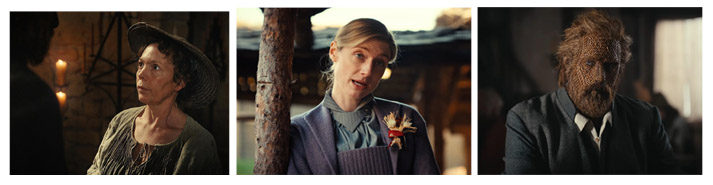
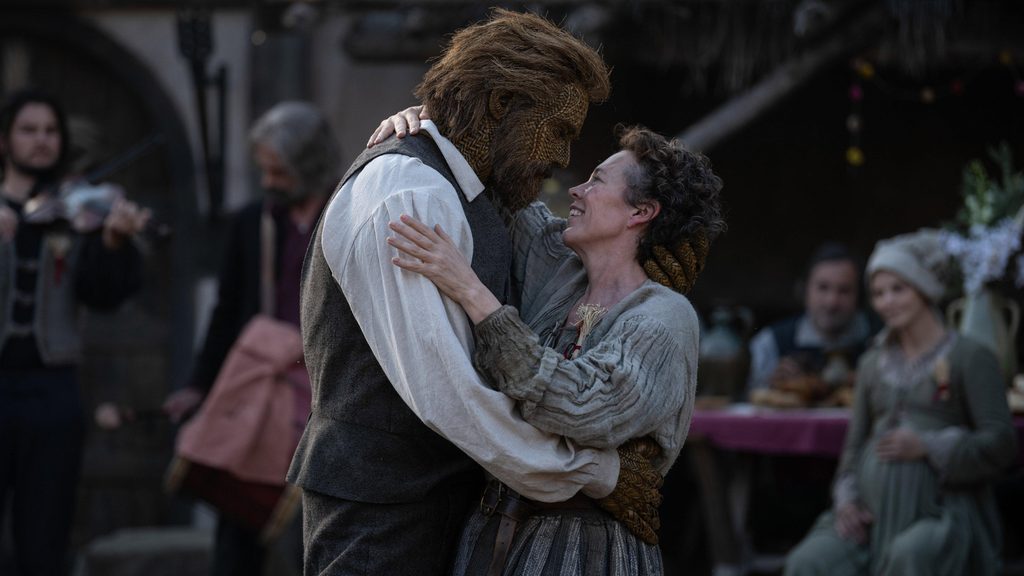
Based on the short story “The Wicker Husband” by Ursula Wills-Jones, the film – now playing in theaters – is set in a waterside village in an unknown era and follows an ostracized woman called the Fisherwoman, played by Oscar-winner Colman. The Fisherwoman is constantly taunted by the townsfolk. Skarsgård plays the Wicker Husband, created as a living man made of wicker by the local basket maker to serve as the Fisherwoman’s loving, virile, and devoted husband. Among his many gifts is the ability to calm and charm using simple, heartfelt words.
“There was something quite innocent about those lines, and I wanted to deliver them in a kind of matter-of-fact way that wasn’t too charged, because the words do all the work for you there,” Skarsgard said. “They’re so beautifully written. He says something so profound but in quite a matter-of-fact way, and it has this huge impact on the Fisherwoman. But I tried not to anticipate how they would land … he’s just saying the truth, isn’t he? And there was something quite sincere and beautiful about that.”
Skarsgard said he found it “quite intimidating to play such a lovely, nice guy. It was a real stretch for me… I tend to gravitate towards morally conflicted characters and slightly troubled characters. The Wicker Husband doesn’t have a past, and is just the epitome of goodness, purity.”
Debicki plays the Tailor’s Wife, one of the town instigators.
“I think what’s so beautiful about this movie is that it’s about how he (Wicker Husband) is a mirror of her (Fisherwoman) beauty and her goodness,” she said. “The thing about the Tailor’s Wife that struck me as something very honest is that someone else’s happiness and an attempt to kind of free themselves from the system is incredibly intimidating to my character. The angry woman on screen is not something that you get to play often. It’s something that people are quite uncomfortable with … so that was a joy for me, really. It’s not necessarily villainous; it’s just that it holds a mirror up to her circumstances and she feels so trapped that she has to sort of fight her own little fight against it.”
The film doesn’t shy from the carnal nature of the new union.
“I get crippled with embarrassment with things like sex scenes, but it was so freeing because it was fun and we had [directors] who are a married couple,” Colman said.
Skarsgård said the film’s tendency toward humor was helpful.
“They’re incredibly funny,” he said of the scenes and dialogue. “But it was also important to fuse them with … you want to feel the connection between these two characters, and you want these moments to be steamy as well, and not just laugh-out-loud moments.”
Costumes are much like characters themselves in the film.
“The costumes are sensational,” Debicki said. “The Tailor’s Wife has a spring and a summer and a winter. We sweated it out.”
Weta Workshop in New Zealand designed the wicker costumes, legendary for its work on”The Lord of the Rings” and “The Hobbit.”
“It was a practical costume, and the only thing that wasn’t practical was basically I was wearing blue sleeves underneath the wicker arm piece so that you could see light shine through it,” Skarsgård said. “Everything else was just – the craftsmanship was extraordinary. In this day and age when there’s so much CGI… it was so fun to have the tactile experience of it.”