

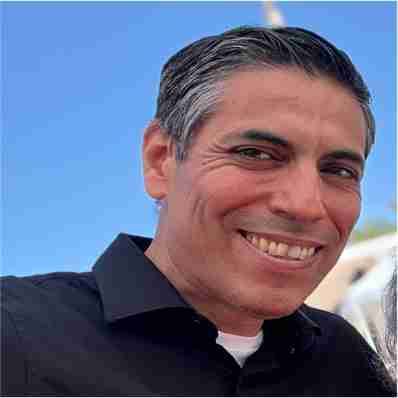
Frank Nuñez – History was my worst subject. In high school, I failed history. Actually, I struggled through just about every subject, graduating from Vista High School with a GPA barely above 1.0. It is not something I’m proud of, but it is part of my story.
Then something unexpected happened.
Years later, I enrolled in college. I eventually graduated with honors from California State University, Northridge, with a degree in Radio, Television, and Film, with an emphasis in Film Production. Ironically, the class that changed my life wasn’t directing or screenwriting. It was the history of cinema. For the first time, history wasn’t a list of dates to memorize. It became a collection of stories.
I discovered 1940s Italian neorealism through The Bicycle Thief. I studied 1930s French poetic realism. I learned why Orson Welles changed filmmaking with Citizen Kane. We discussed the significance of The Jazz Singer (1927), one of the first talking pictures, and wrestled with the complicated legacy of The Birth of a Nation (1915). We explored the countercultural shifts of the 1960s reflected in films like Easy Rider and The Graduate.
Somewhere between those lectures and late-night screenings, something clicked.
I realized history isn’t simply about the past. It’s about understanding how we became who we are. That realization changed my life.
I have spent much of my life telling stories through film, community work, and now through my forthcoming memoir, Los Angeles Street: From Juvenile Hall to the Ballot Box. There’s a reason each of the 58 chapters of my memoir is named after a film.
Looking back, I realize those weren’t just movie titles. They were milestones. History had quietly become part of my own story.
As a filmmaker, I learned that every great film leaves behind a record of the people who made it, the culture that shaped it, and the generation that embraced it.
Stories become history. History becomes identity.
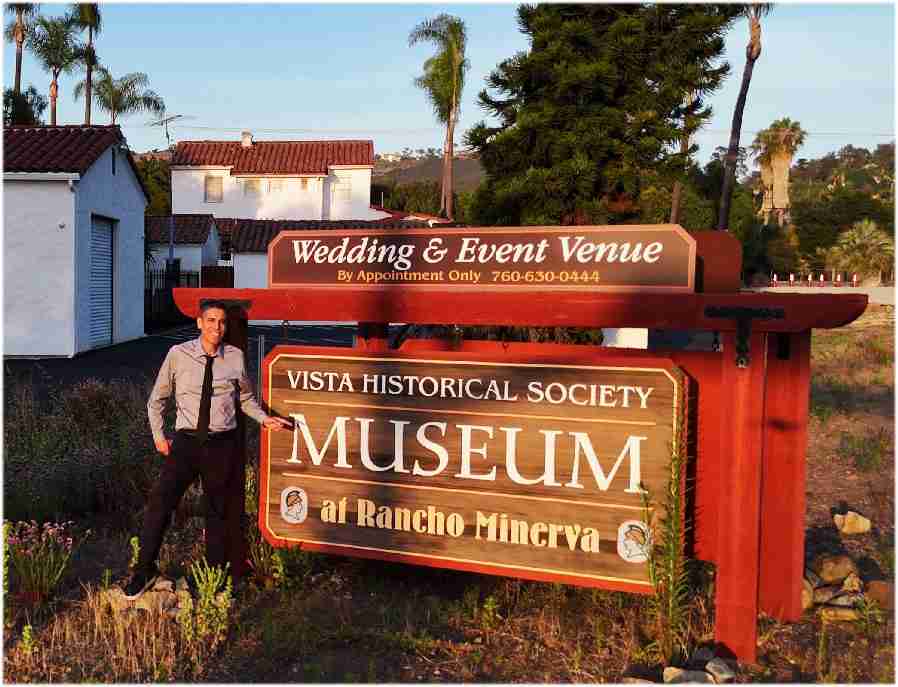
This past Saturday, that lesson came full circle. As the newest board member of the Vista Historical Society, I had the privilege of attending the reopening celebration of the Vista Historical Museum. Outside, classic Camaros, Mustangs, hot rods, and vintage automobiles lined the parking lot at VIDA School during the Pride of Vista Lions’ Muscle off Main Street Car Show. Across the street, the Hall of Fame Orchestra filled the air with music that transported visitors to another era.
Standing there, surrounded by families, volunteers, musicians, classic cars, and generations of Vistans, I couldn’t help but think about how far life has taken me.
If someone had told the teenager who barely graduated high school that one day he would serve on the board of the Vista Historical Society, I probably would have laughed.
Yet there I was.
Not because I suddenly became a history expert, but because I finally understood why history matters.
History isn’t perfect.
Every community has chapters it celebrates and chapters it learns from. Preserving history isn’t about pretending the past was flawless. It’s about telling the truth, remembering the people who came before us, and giving future generations the opportunity to understand where they came from.
That responsibility belongs to all of us. My parents chose Vista in 1964. This community became home. These streets shaped my childhood, my family, my career, and now, in many ways, my purpose.
Every story matters. Every family photograph tucked away in a drawer. Every avocado grove that once defined our hillsides. Every old storefront—from Pepper Tree Frosty to Froggy’s Donuts. Every theater that once lit up a Friday night—from the Avo to the Stardust. Every newspaper clipping—from the Vista Press to the Blade-Tribune.
These aren’t just artifacts. They’re chapters of Vista’s story.
And I believe there are still countless stories waiting to be discovered.
Stories remembered only by grandparents. Stories hidden inside attics and garages. Stories sitting quietly in old photo albums. Stories that will disappear forever if we don’t take the time to ask one more question.
I used to think history was something you studied. Now I believe history is something you preserve, one story at a time. Because we can’t preserve every building. But we can preserve every story. History isn’t over. We’re still writing it. Every generation leaves its own chapter. The question is whether we’ll leave behind something worth remembering.
Frank Nunez…Director, Vista Irrigation District | Board Member, Vista Historical Society | Candidate for Vista City Council, District 1 | Founder, Future Filmmakers | Filmmaker & Author